

Tulsa Ballet, Made in America Review 3.5*
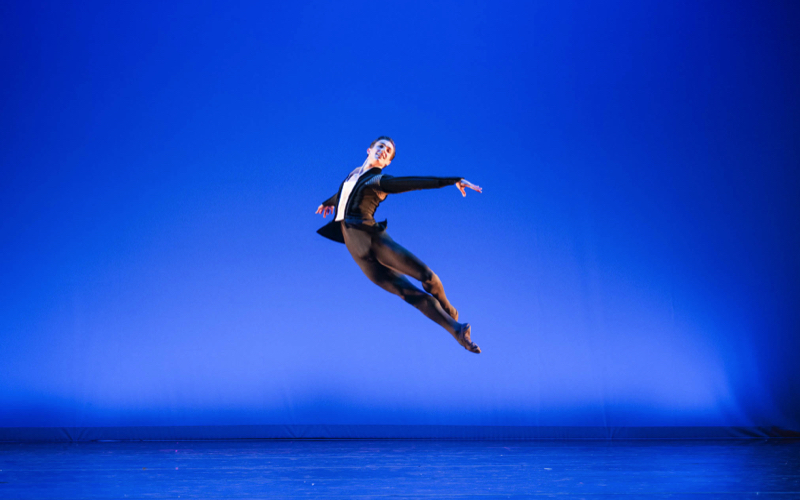
Tulsa Ballet made its UK debut at the RBO Linbury with a thrilling display of technique and showmanship
This article was first published on London Unattached
Tulsa Ballet, Oklahoma’s largest performing arts organisation, brought a large dose of American showmanship to the Linbury with Made in America, a triple bill of very distinctive works that illustrates the company’s talent, technique and versatility.
American dancers possess unique attack and a very special way of engaging the audience by appearing to look straight into our eyes, inevitably drawing us in and keeping us focused. All three works in Made in America build on those qualities, and if I have quite a few quibbles about all three, I have absolutely no reservations about the dancers, whose performances I found thrilling.
The programme for Tulsa Ballet’s first ever visit to the UK opened with US-based Ukrainian choreographer Yuri Possokhov’s Classical Symphony, set to Prokofiev’s Symphony No 1 in D Major, Opus 25 ‘Classical”.
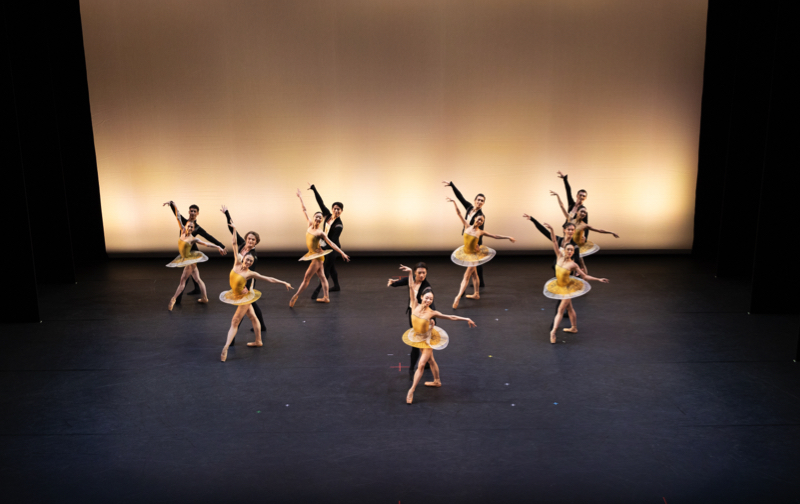
It’s a neo-classical work, which shows off the dancers’ impeccable, often exuberant, classical technique, both in pair work and in its very many individual variations. However, after a neat opening movement, where the dancers moved in unexpected, interesting groupings and formations, the choreographer appeared to run out of ideas, so that the ensuing movements lost structure and progression, to become merely academic successions of party tricks. Sandra Woodall’s costumes – all black for the man, flimsy, two-layer printed tutus for the women – were flattering and easy on the eye. And although all 14 dancers performed to a high level, I was particularly impressed with Nao Ota and Jun Masada, who danced the opening pas de deux.
The second piece was Divenire (Italian for ‘becoming’) by Nicolo Fonte, who drew his inspiration from the music of Ludovico Einaudi.
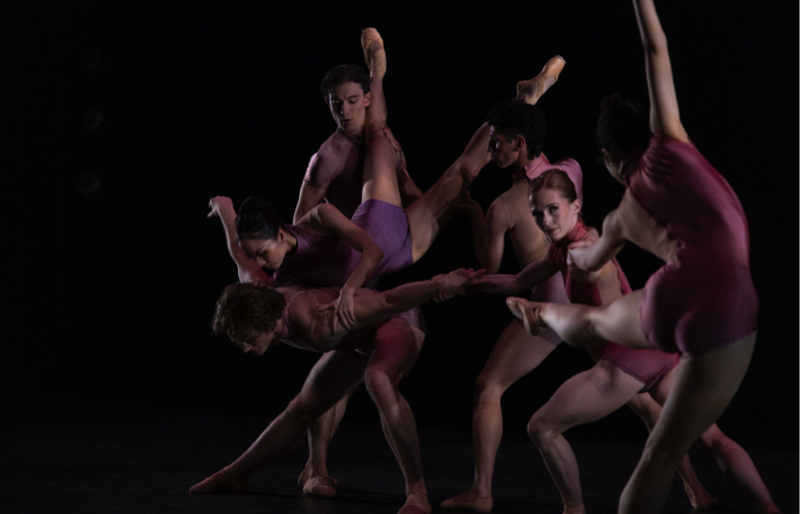
The Italian Einaudi, whose stated aim is to create emotionally accessible music, is a prolific composer perhaps more widely known for his soundtracks for film (Nomadland, The Father) and TV, and there is a cinematic quality to the score for this 25-minute piece, created on the dancers of Tulsa Ballet.
The curtain goes up on an arresting image: on an otherwise dark stage, the only light falls on the head, torso and outspread arms of a woman raised aloft by another. It’s a brief tableau, which dissolves as she is brought down and the dancers flood the stage, costumed in unisex, long, flowing black trousers, which throughout the piece they will wear or discard for no discernible reason (costume designer Anaya Cullen).
The choreography searches for sweeping, emotion-evoking movement, building on the women’s elastic extensions.
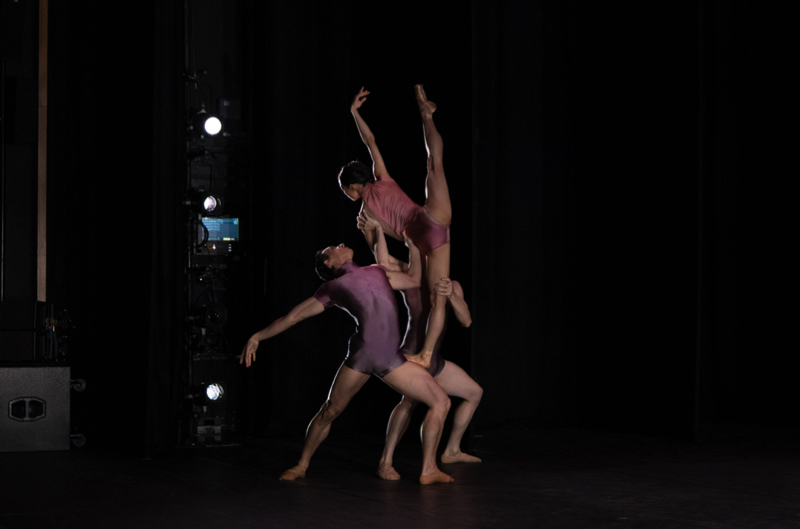
To start with, the women are in soft shoes, but they will later swap those for pointe shoes. The purpose of this change is not clear. In fact, a lot of where this overlong piece is going is unclear, and for all that it was danced with commitment and feeling, it left me unmoved. The most striking moments were those where the dancers formed brief, well-composed tableaux.
The final piece in Made in America brought a complete change of mood and more than a whiff of Broadway. Also created on these particular dancers, it’s the work of Andy Blankenbuehler, best known for his Tony Award winning choreography in Hamilton.
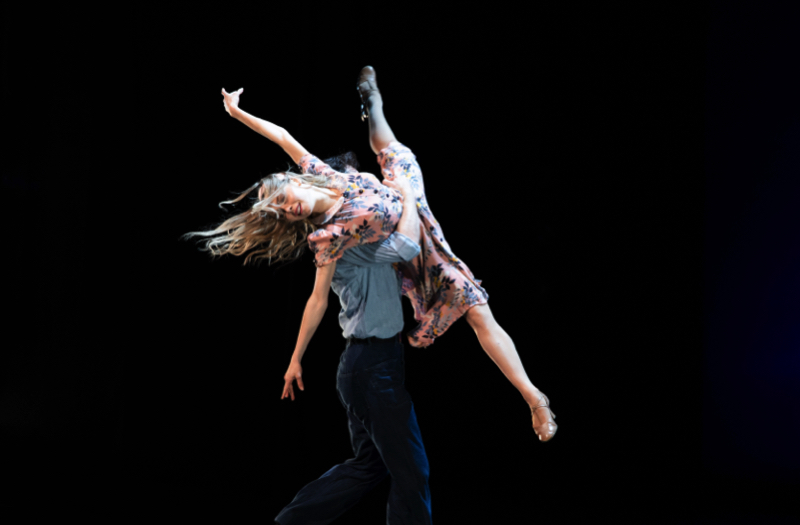
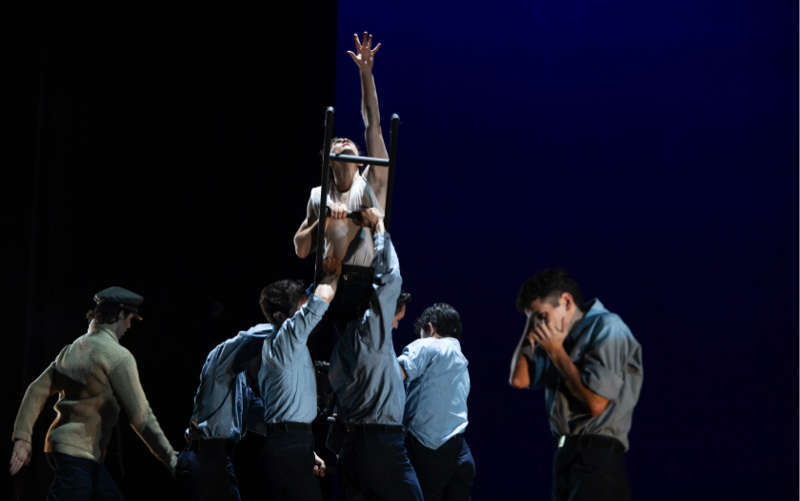
Entitled Remember our Song, it’s a short 15-minutes narrative piece set aboard a submarine in wartime. Although its narrative is unclear, this piece has much to recommend it. I was impressed with the way in which, in the absence of set and props other than a ladder and some stools, the work efficiently created the sense of claustrophobia of the narrow enclosed space of a submarine, through the sole use of movement.
When men and women dance together, as the men recall happier times, they shimmy and jive, and turn and lift with the ease of practiced Broadway hoofers, the piece brims with contagious vigour.
I see from their website Tulsa Ballet has a full and varied repertoire, including full length pieces such as Cinderella. Their UK debut left me wanting to see a lot more from this interesting company.
© Teresa Guerreiro
(Banner Image: Tulsa Ballet in Classical Symphony, dancer Carlos De Miguel. Photo: Kate Luber)
Tulsa Ballet is at the RBO Linbury Theatre 13 – 17 May 2026. Full info and tickets here