

Dutch National Ballet La Bayadère Review 5*
Dutch National Ballet rescues La Bayadère from itself with a glorious new production mindful of 21st century sensitivities
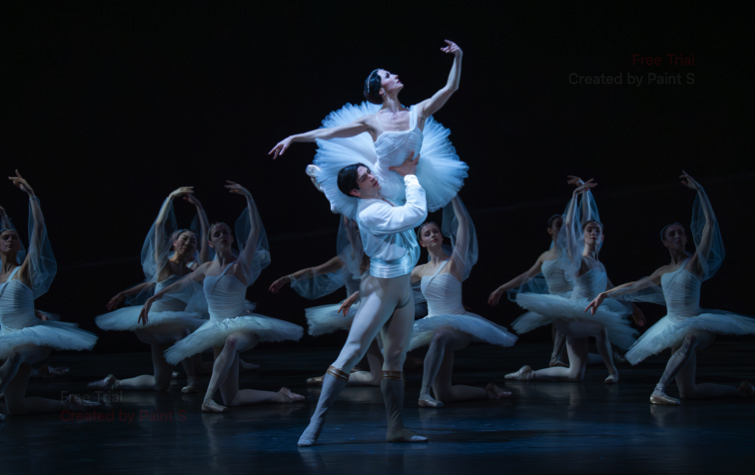
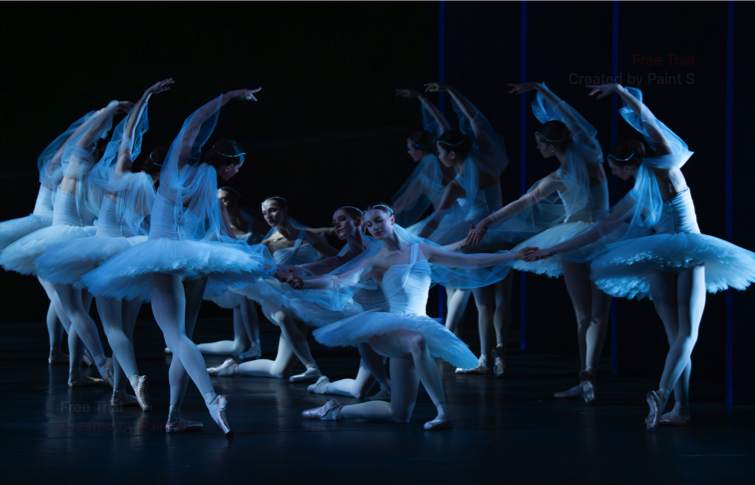
One by one 32 ballerinas in diaphanous white tutus, bathed in dreamy moonlight, slowly descend a ramp in a simple, but truly hypnotic sequence: step, step, arabesque penché, port de bras. It will be repeated 32 times over, as each dancer joins the line of the identical, perfectly synchronised figures that populate the Kingdom of the Shades in Act II of La Bayadère. It is arguably the most transporting white Act in the repertoire, and one of the reasons why La Bayadère, choreographed by Marius Petipa on a very danceable score by Ludwig Minkus, is justly considered a jewel of 19th century Russian ballet.
La Bayadère, though, has become a problematic ballet; so much so that some Western companies have abandoned it altogether. Why? Because its setting in an exotic India, as imagined by Westerners in thrall to a Romantic mania for ‘orientalism’, is full of stereotypes, which, as Dutch National Ballet Director Ted Brandsen stressed in his pre-premiere presentation, are no longer acceptable to modern sensitivities.
The question, then, is, do you keep La Bayadère regardless (Paris Opera Ballet’s option) or quietly drop it from the repertoire (the apparent decision of The Royal Ballet)? For those who can’t bear the thought of consigning this wonderful ballet to oblivion there is a third option: keep the very best and adapt what is no longer acceptable.
That’s the route Carlos Acosta has opted for in his brand new The Maiden of Venice for Birmingham Royal Ballet, which should premiere sometime in 2027.
Meanwhile, Dutch National Ballet’s brand new La Bayadère has just had its premiere in Amsterdam (26 March 2026). The result of three years of painstaking research and development work, involving Indian academics Dr Priya Srinivasan and Kalpana Raghuraman, this production eschews every trace of cultural appropriation – out go hirsute, semi-naked fakirs frantically dancing around a sacred fire, the arrogant High Brahmin, a distorted notion of temple dancers, exaggerated hieratic gesturing, and worst of all, “black face”.
It keeps the central story of the tragic love between Nikiya and Solor, his betrayal and remorse leading to his opium-fuelled vision of the Kingdom of the Shades.
And as meticulously staged by Dutch National Ballet Associate Artistic Director Rachel Beaujean, whose previous adaptations of classics have garnered enthusiastic praise, this La Bayadère keeps much of Petipa’s masterful choreography, with judicious additions.
The historic setting is a Dutch colonial outpost in Southeast India, beautifully evoked in Jerôme Kaplan’s set and costume design.
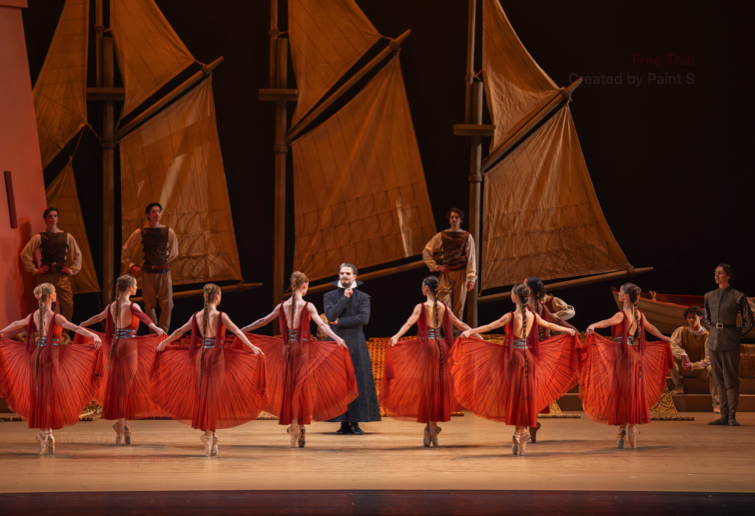
The characters’ identities are adapted accordingly: Nikiya is a dancer connected to the corrupt Dutch merchant Lambert Hemsinck, Solor is a captain in the Dutch army; Alida (formerly Gamzatti) is the daughter of the Dutch governor Willem Carel Hartsinck, the woman for whom Solor betrays Nikiya, dazed by her father’s promises of power and influence.
The concept works absolutely; and a trio of protagonists alongside a corps de ballet on remarkable form made the premiere of Dutch National Ballet’s La Bayadère a memorable occasion.
Company principal Anna Tsygankova’s deep musicality, assured technique (those sustained balances!) and soft, eloquent arms, lent her Nikiya an enthralling quality, whether in her solo exhibition dances, in her dances of love for Solor, or in the confrontation with her rival Alida.
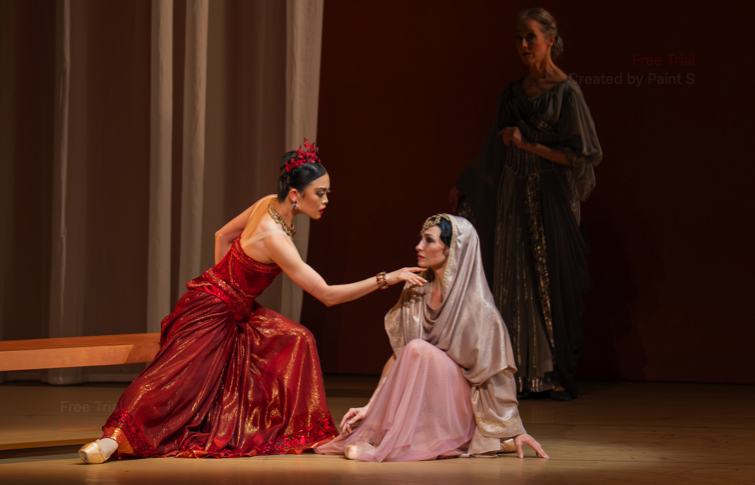
Riho Sakamoto brought a compelling quality to her Alida with dancing that embodied the hauteur of an entitled woman used to getting what she wants, owning the stage with her fierce, powerful jump.
However, the breath-taking thrills of the evening came courtesy of Giorgi Potskishvili’s Solor. Born and trained in the former Soviet republic of Georgia, Potskishvili’s dancing exhibits much of the bravura we’ve come to associate with the Bolshoi style. With a ballon that has to be seen to be believed, and the ability to stop mid-air for a second or two, Potskishvili appears to fly. His control of virtuoso classical technique is absolute, mind-blowingly so. Equally enthralling is his expansive stage presence, the way in which he crowns each sequence with a grand gesture.
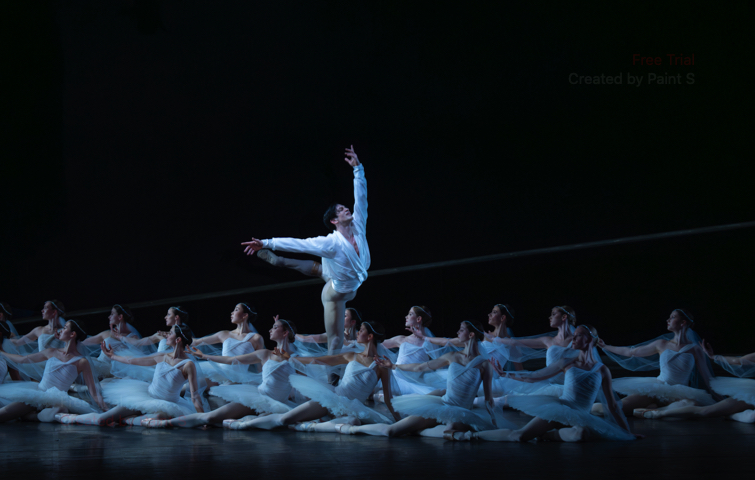
His mime is exuberant: when he mimes he loves Nikiya, his mime tells you he really, really loves her; when he mimes she is beautiful, his mime indicates she is the most beautiful woman in the world. It’s gripping.
And he was an attentive, totally reliable partner to both Sakamoto and Tsygankova.
Among the soloists I was impressed with Shades Connie Vowles, Salome Leverashvili and Jessica Xiuan, who made short work of Petipa’s fiendishly difficult choreography, and Sho Yamada in the virtuoso solo of the Eclipse Statue (formerly Golden Idol).
Het Balletorkest, conducted by Keon Kesssels, gave an impeccable account to the score.
© Teresa Guerreiro
(Banner Image: Het Nationale Ballet, La Bayadère © Altin Kaftira)
Dutch National Ballet, La Bayadère is at Nationale Opera & Ballet, Amsterdam until 19 April 2026