
Ballet Nights New Year’s Day Concert 3*
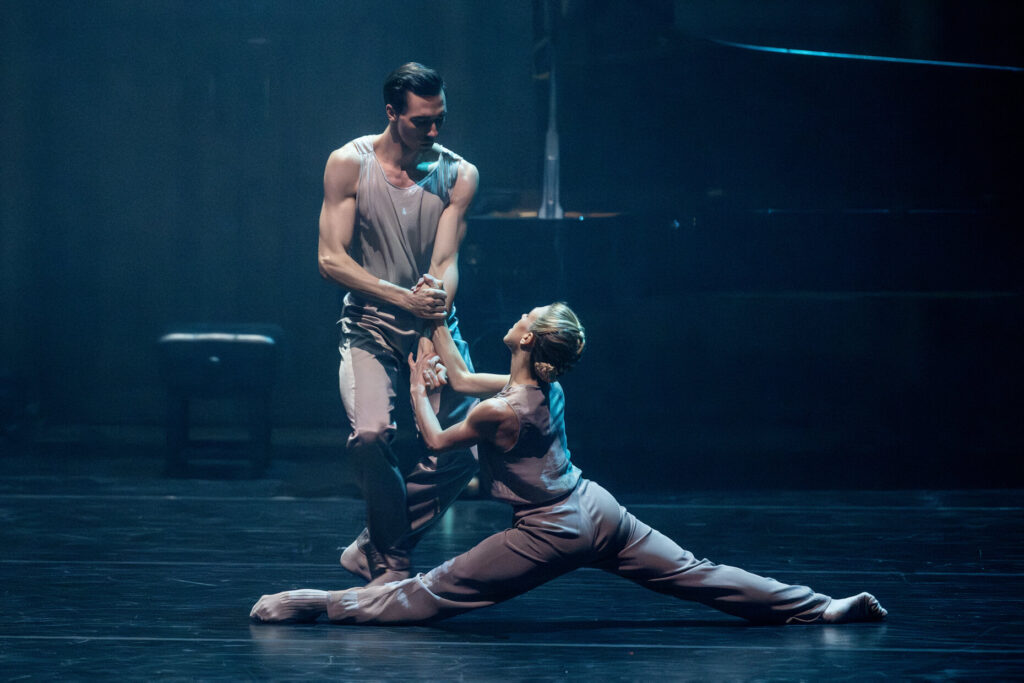
Ballet Nights rang in 2026 with a mix of music and dance in its New Year’s Day Concert at Cadogan Hall
This article was first published on London Unattached
Ballet Nights hit the ground running just over two years ago as “a new way of seeing dance”, in the words of his go-getting founder Jamiel Devernay-Lawrence. It has since come a long way, grown and evolved; and its first New Year’s Day Concert, which rang in 2026 at Cadogan Hall, marked yet another departure from the starting format.
Originally the two-hour shows mixed big names from major ballet companies with young hopefuls performing classical and contemporary pieces, each number preceded by a useful little spiel by Devernay-Laurence in the role of compère. Each half of the evening opened with a piano piece played by Ballet Nights’ resident pianist Viktor Erik Emanuel.
However, as the name indicates, musical performance formed a large chunk of the Ballet Nights New Year’s Day Concert, and two operatic voices were among the highlights of a slightly up and down show.
New Year’s Day Concert – The Music
Compèred by Jamiel Devernay-Laurence in his usual ringmaster mode (useful as his information always is, I would welcome a slightly less bombastic style), the New Year’s Day Concert opened with a piano quintet where Emanuel was joined by Ballet Nights partners Quartet Concrète in two movements from Dvořák’s ‘Piano Quintet No 2 Op 81’.
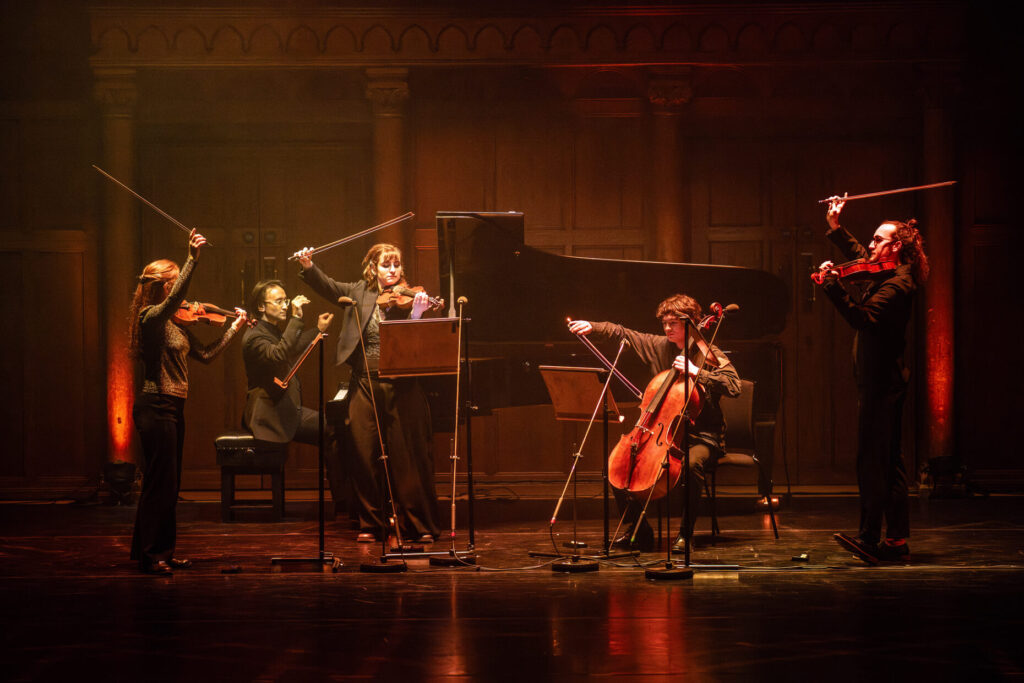
It was a jaunty, mood-setting opening to the show. Quartet Concrète returned to open Part II, sawing away at their strings with the rather less pleasant, in fact nerve-shredding, ‘Aheym’ by composer Bryce Desner.
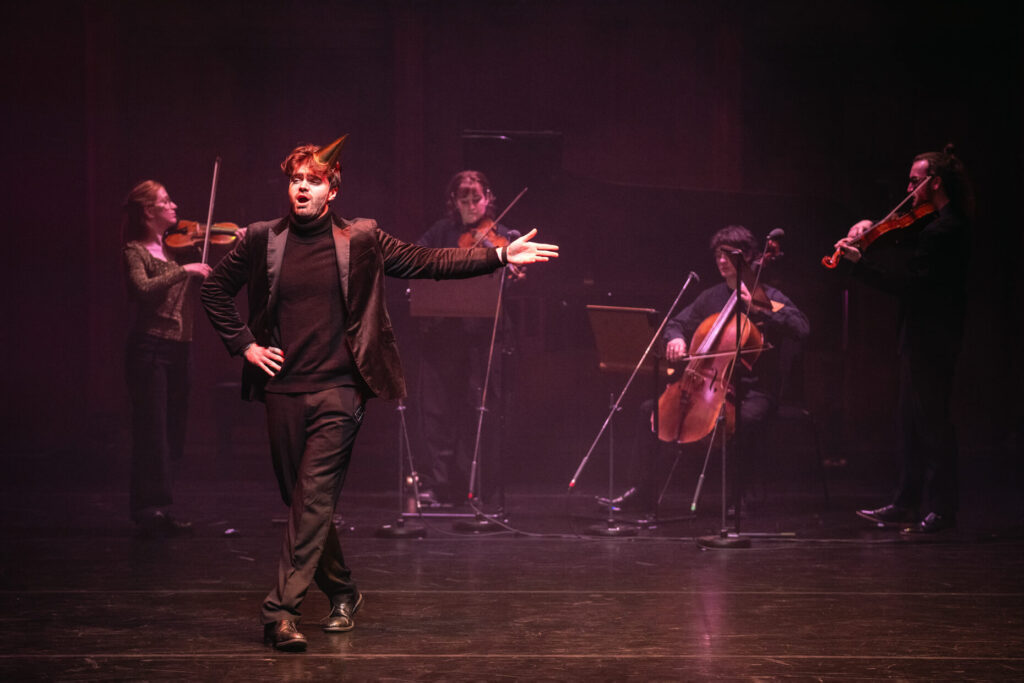
They would play a reduction for string quartet of ‘Largo al Factotum’ from Rossini’s opera The Barber of Seville, accompanying the remarkable British-Irish baritone Patrick Alexander Keefe, whose big, glorious voice and comedic acting gave us a Figaro to cherish.
Viola player Dominic Stokes took to the stage solo to play a section from Hindemith’s ‘Viola Sonata Op 25, No.1’.
The quartet worked hard, then, as did Viktor Erik Emanuel, who offered a sparkling performance of Chopin’s ‘Étude in C sharp minor Op 10’, nicknamed ‘The Torrent’, as well as accompanying the stunning Azerbaijani soprano Gulshan Akin in the most famous aria from Puccini’s Tosca, ‘Vissi d’Arte’. Akin looked the part, too, dressed in Tosca fashion, in a glittery white empire-line gown, trailing a bright red satin cape.
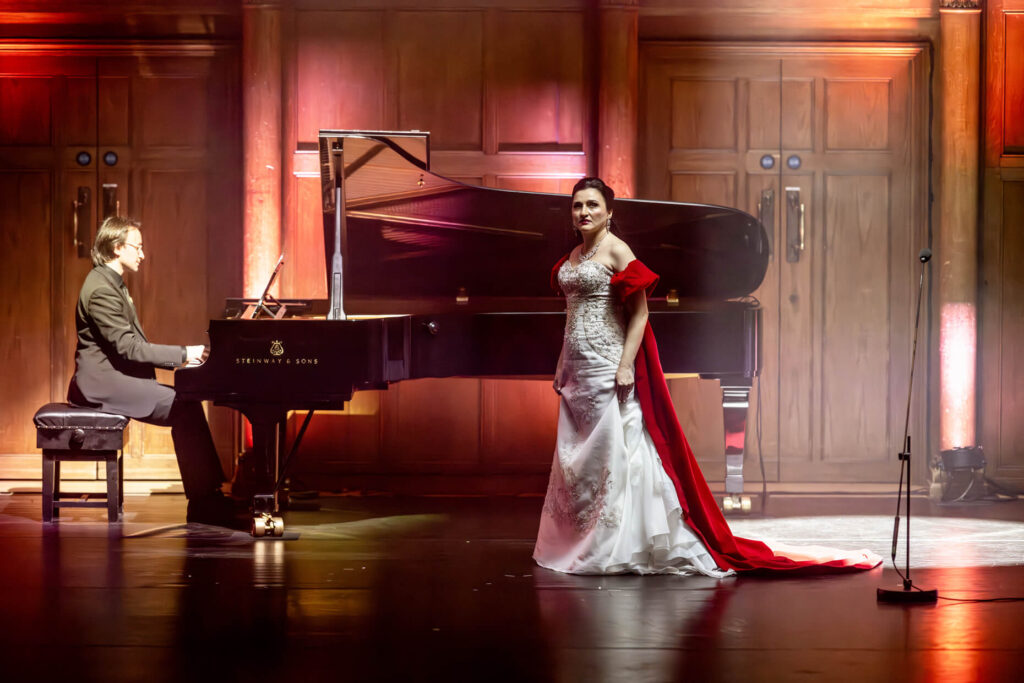
The striking visual element, combined with her compelling voice, meant I couldn’t take my eyes off her, which was unfortunate for ballerina Liudmila Konovalova. That’s because in a singularly misconceived work, the aria was meant (I think…) as the backdrop to a dance piece choreographed by Paris Opera Ballet’s Sebastian Bertaud, in which the dancer, costumed in a diaphanous flesh-coloured tule skirt, did lots of things with her arms and very little with the rest of her body, to no apparent purpose. Aptly named Evanescence, piece evanesced from my mind even before the last musical notes sounded.
New Year’s Day Concert – The Dance
Luckily, that was followed by one of the dance highlights of the evening, the enthralling Moonlight, danced by Constance Devernay-Laurence and Gareth Haw. This is a section from a piece developed for London City Ballet by the French choreographer Florent Melac.
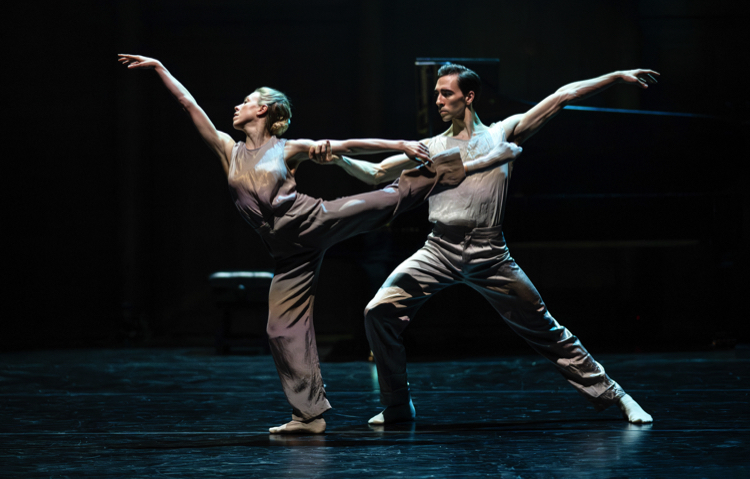
Devernay-Laurence had danced it with London City Ballet; English National Ballet principal Gareth Haw hadn’t and they hadn’t partnered before, but you wouldn’t know it, such was their mutual understanding. Moonlight is an intense, passionate piece, where the bodies rarely let go of each other, with frequent, unusual and tricky lifts – both these dancers gave totally engaging performances. Bravi.
Another highlight was Bitter Earth, a piece for two men and one woman by multi-award-winning choreographer Kenneth Tindall, set to an affecting score that superimposed Dinah Washington’s voice on Max Richter’s music.
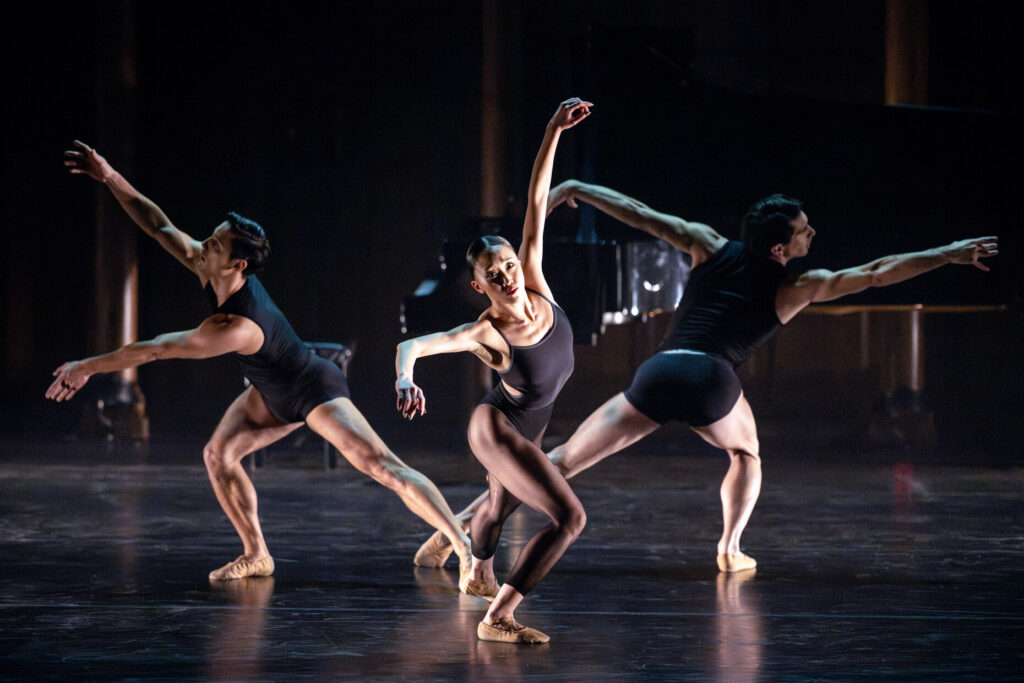
Minju Kang and Lorenzo Trossello of English National Ballet (last seen in ENB’s Nutcracker at the Coliseum) were joined by Northern Ballet principal Kevin Poeung in work that seamlessly blended classical and elastic, reaching, contemporary movement. It’s a beautiful piece and they did it full justice.
Elsewhere Ballet Nights young regulars Ekleido choreographed and performed Clinquant, a typical work where two bodies created strange and very clever configurations and at times it was hard to tell whose arms were whose.
The young Cuban soloist from Birmingham Royal Ballet Yasiel Hodelín Bello salvaged his evening with a neat short solo from Don Quixote, after opening the dance section of Part I with an unfortunate go at a solo from that old chestnut without which no gala would be complete, Le Corsaire.
The evening ended with a curtailed version of the wedding pas de deux from The Sleeping Beauty, where Gareth Haw returned to partner Liudmila Konovalova. I had been underwhelmed by her Clara/Sugar Plum Fairy in NEBT’sThe Nutcracker, and again she failed to connect with me. She has the technique, of course – she is, after all, an alumna of the most exacting of ballet schools, St Petersburg’s Vaganova Academy – but Aurora she isn’t. To me it looked like dancing by numbers, with little or no attempt at characterisation. Gareth Haw, though, was his usual elegant, attentive and reliable partner.
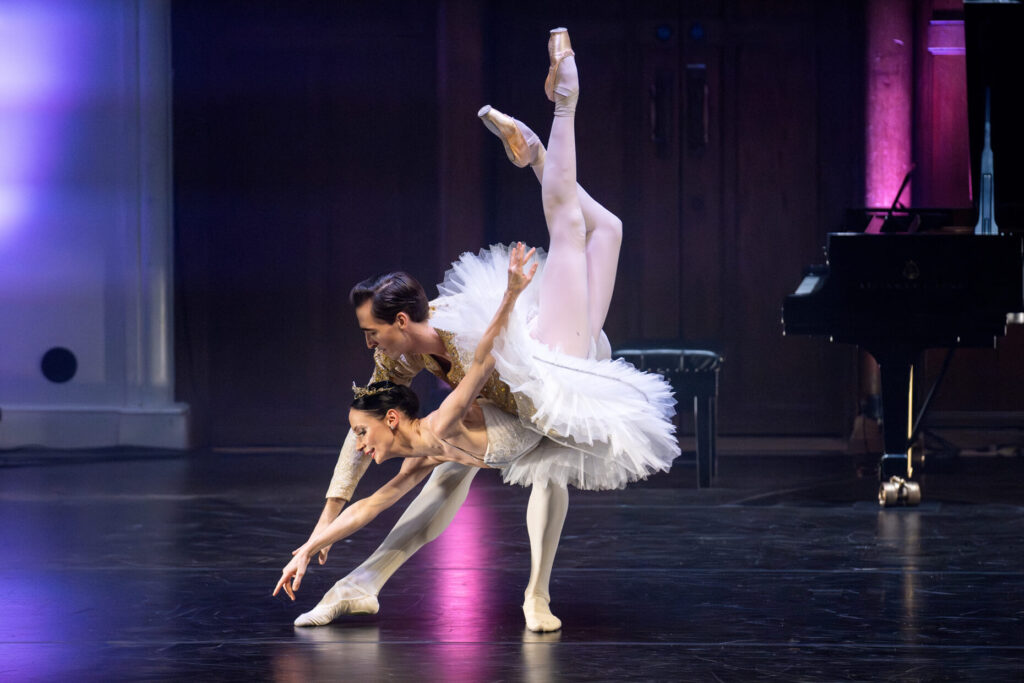
The New Year’s Day Concert, then, was a mixed bag, where good superseded not so good. It heralded a year in which Jamiel Devernay-Laurence promised that Ballet Nights had ambitious plans to grow and tour. Watch this space.
© Teresa Guerreiro
(Banner image credit: Ballet Nights, New Year’s Day Concert. Constance Devernay-Laurence and Gareth Haw in Moonlight. Photo: Deborah Jaffe)
Ballet Nights New Year’s Day Concert was a Cadogan Hall on 01 January 2026