

Gentleman Jack The Ballet Review 4*
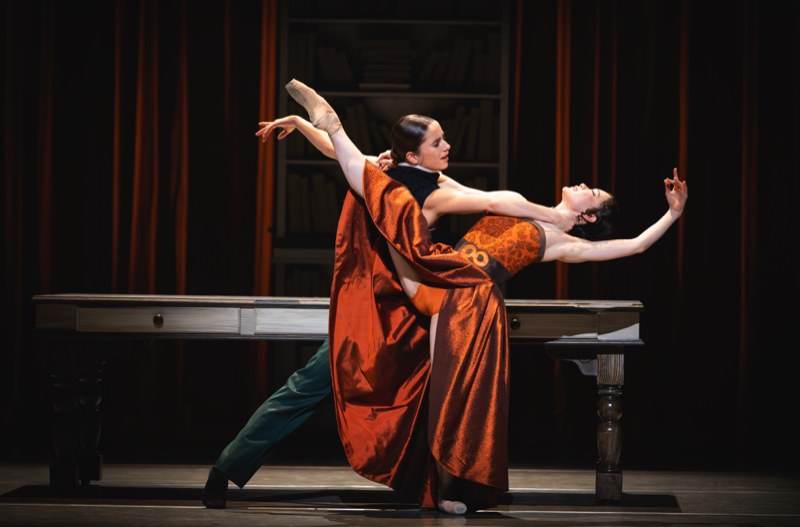
Northern Ballet and Annabelle Lopez Ochoa celebrate the ‘first modern lesbian” Anne Lister, better known as Gentleman Jack
This article was first published on London Unattached
Gentleman Jack is possibly the first ever ballet centred on a lesbian heroine: Anne Lister, the indomitable 19th century Yorkshire landowner, known as Gentleman Jack, who lived and loved as she liked with no concessions to societal mores and restrictions. Since the discovery and decryption of her detailed diaries, Lister has become a subject of fascination, generating novels, a popular TV series and now, too, a ballet, which premiered in Northern Ballet’s Leeds home and has reached Sadler’s Wells as part of an extensive tour.
Northern Ballet has an enviable repertoire of narrative ballets and Gentleman Jack, artistic director Federico Bonelli’s first full-length commission, perfectly fits the company’s mould. Choreographed by Annabelle Lopez Ochoa, the multi-award-winning maker of more than 100 ballets for a raft of international companies, with Clare Croft credited as dramaturg, its story flows with absolute clarity, its broad-brush characters coming vividly to life through choreography that is spare, unfussy and highly effective.
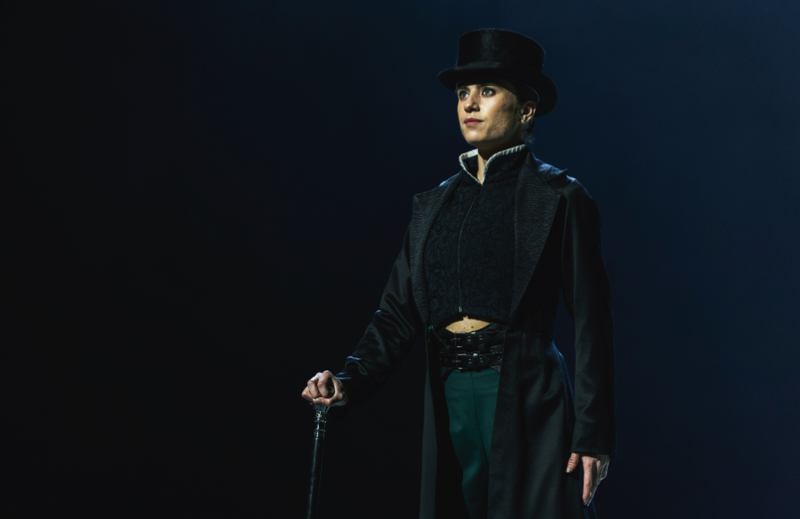
A prologue shows Anne Lister in top hat, black frock coat with green lining and soft ballet shoes surrounded by a group of men on an otherwise empty stage, duskily lit by Christopher Ash. At intervals she taps the floor with her silver-topped cane, her ever-present symbol of unfeminine dominance. She is danced with tremendous assurance by Gemma Coutts, her leitmotiv move, an almost provocative flick of the hip and leg, denoting the character’s self-confidence.
Act I plunges right into the story. Anne confronts striking miners, but her attempts to make common cause with other landowners are rebuffed, the men’s outrage at seeing a woman meddle in their business clearly depicted. A domestic scene with her demure aunt, uncle and sister is disrupted by the arrival of Marianna, Anne’s lover. The heat goes up a notch or two.
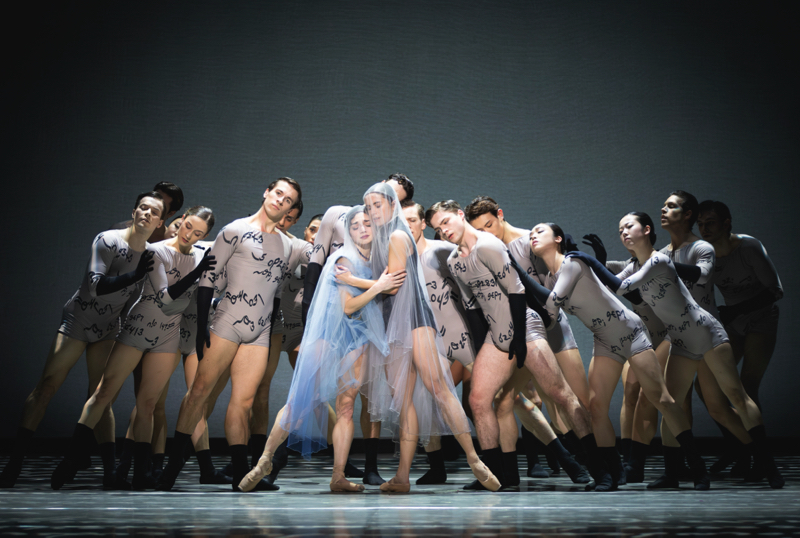
The pas de deux between the two women is erotically charged, cleverly subverting the balletic norm of male/female duets. When with Anne, Saeka Shirai’s Marianna dances with kittenish sensuality; but when she returns to her husband her movements become stilted, her body appearing to fold in on itself. With Anne left to pour her pain and humiliation into her diaries, Lopez Ochoa floods the stage with a large ensemble in body suits printed with Anne’s cypher, with lines of the same cypher projected onto the floor; a process that will recur at intervals during the ballet, as Anne obsessively commits her thoughts and feelings to paper.
A small selection of clever props, primarily three tall cabinets brought on by dancing cast members, frame the action: on one side they’re bookshelves, denoting the various interiors; turned around they are screens setting outdoors scenes, be it the Yorkshire moors, or the bustling streets of Paris, where, at the beginning of Act II, Anne travels and is startled to find the kind of freedom and hedonism unthinkable in provincial, staid Yorkshire.
Here the predominantly subdued palette of the first scenes changes radically, as Anne meets a group women in colourful, flowing skirts, hair loose, waltzing together happily.
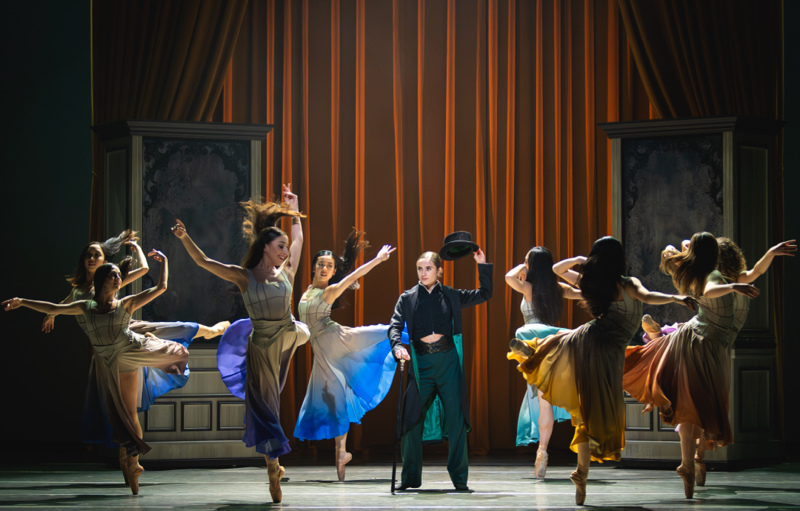
This scene is short, and I wondered whether more could have been made of Anne’s Paris sojourn, but perhaps that would have slowed the pace of the action and the culmination of the story: Anne Lister’s relationship with Ann Walker, danced by Rachel Gillespie. Their love pas de deux, set mostly on a table, is longer, more intense and more sexual than the early encounter with Marianna. It’s also entirely convincing. Always in control, Anne Lister teses Walker’s body with a feather, generating frissons of desire, Walker responds with growing eagerness. It’s sex, of course, but it’s also the beginning of love.
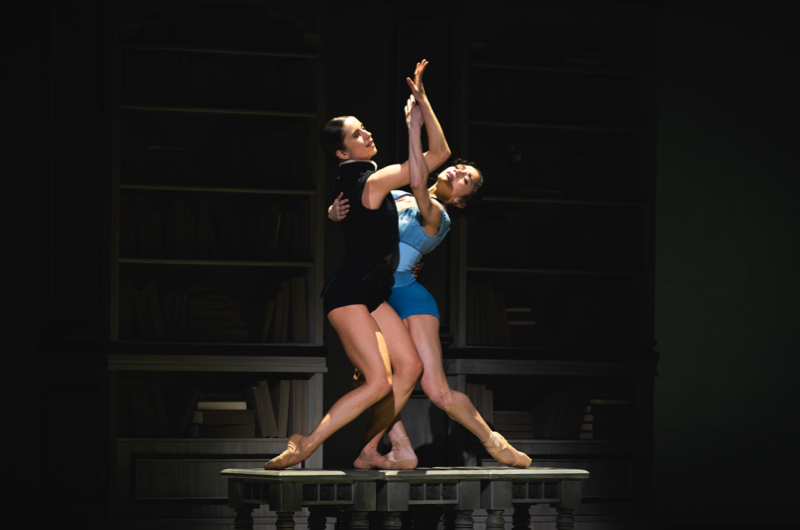
The lovers’ secret, symbolic wedding is portrayed in a scene where the two veiled women meet among the writings of Anne’s diaries, which were for long the only repositories of the secret.
Northern Ballet’s Gentleman Jack is an immensely accomplished ballet, its concise theatricality entirely admirable. Peter Salem’s percussive score was played live by Northern Ballet’s Orchestra, conducted by Daniel Parkinson. For all its strengths, though, I found it emotionally uninvolving – very easy to admire, not so easy to love
© Teresa Guerreiro
(Banner Image: Gemma Coutts and Saeka Shirai in Gentleman Jack. Photo: Emily Nuttall)
Northern Ballet Gentleman Jack is at Sadler’s Wells 19 – 23 May 2026 as part of a UK tour